Pale Blue Dot: Reflections on our Place in the Cosmos
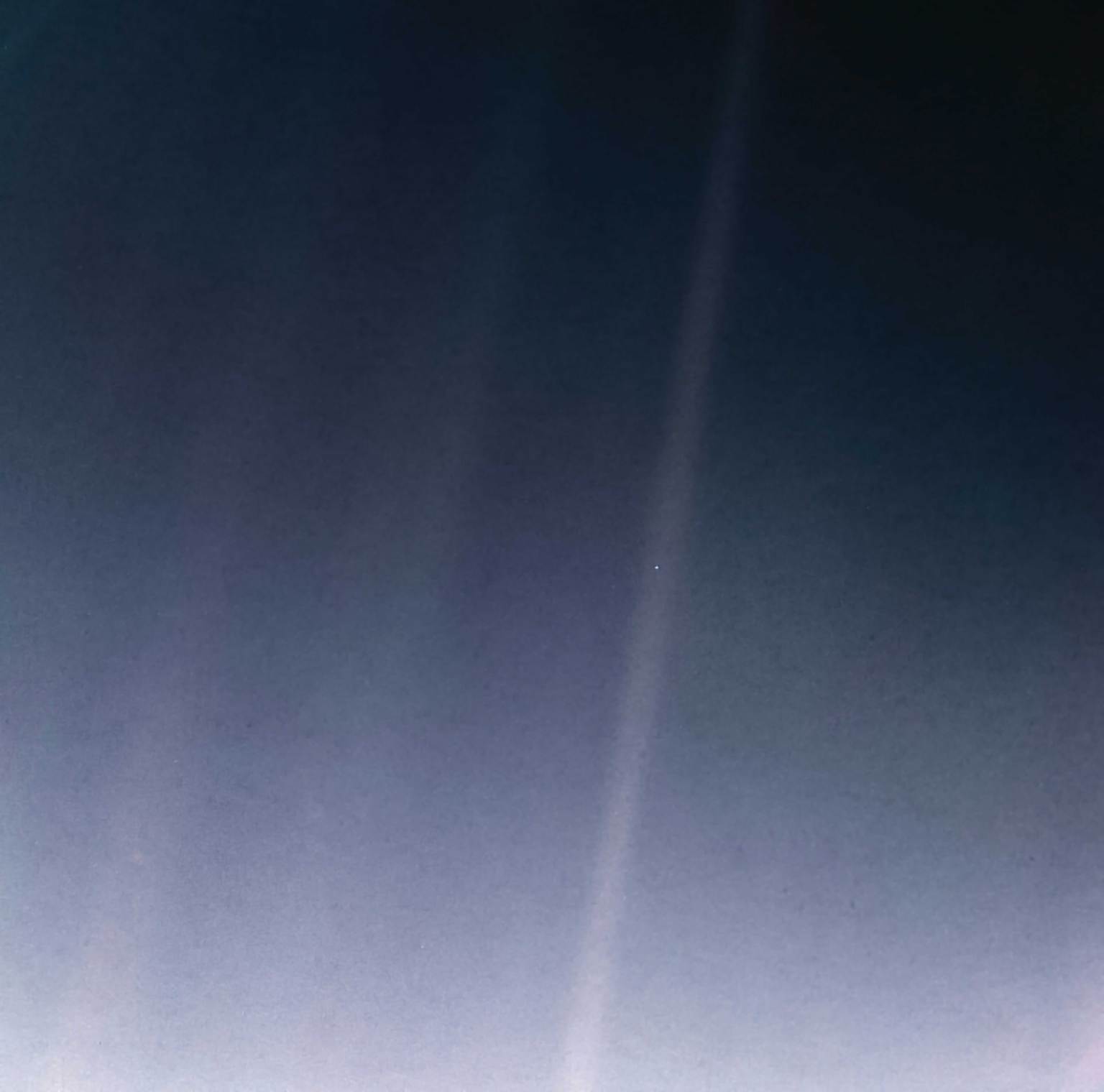
Figure: The Pale Blue Dot photograph, captured by NASA’s Voyager 1 spacecraft on February 14, 1990, from approximately 3.7 billion miles (6 billion kilometers) away from the Sun. Inspired by Carl Sagan’s book Pale Blue Dot: A Vision of the Human Future in Space. The enhanced Pale Blue Dot Revisited version was released in 2020 to commemorate the photograph’s 30th anniversary.
The Iconic Perspective
The Pale Blue Dot is a photograph of Earth taken Feb. 14, 1990, by NASA’s Voyager 1 at a distance of 3.7 billion miles (6 billion kilometers) from the Sun. The image inspired the title of scientist Carl Sagan's book, "Pale Blue Dot: A Vision of the Human Future in Space," in which he wrote: "Look again at that dot. That's here. That's home. That's us." The image, "Pale Blue Dot Revisited," was created in 2020 for the 30th anniversary of the iconic picture. The updated version used modern image-processing software and techniques to revisit the well-known Voyager view, while attempting to respect the original data and intent of those who planned the images.
The Human Condition on a Dot
In this photograph, that tiny speck of light is our home planet. Every human tragedy, betrayal, morality, law, and crime along with all the self-obsessed beings who have ever lived - belongs right here. We often act as though we understand everything about our purpose, aims, and dreams, yet all of human history remains confined to that tiny blue dot, captured even from within our own solar system.
Technological Progress vs. Fundamental Mysteries
We look forward to an era of rapid technological advancement, aspiring to build artificial general intelligence, humanoid robotics, and futuristic spacecraft. Yet, across thousands of years, our most fundamental questions remain unanswered:
- Are we alone in the universe?
- What is consciousness, and can we ever create it?
- How did the universe actually form, and what existed before the Big Bang?
- Why does the cosmos appear so random, and do higher dimensions exist?
- We still struggle to define the essence of morality and ethics.
Expanding Boundaries of Knowledge
As we continue to push the boundaries of knowledge, every answer we discover seems to reveal even deeper mysteries, reminding us of how much we have yet to comprehend.